Jack Johnson, The Importance of Perspective
1898’s was when the first car, “Gasoline Carriage”, came to west Michigan
large automotive economic platform in West Michigan (more than 150 companies in local chamber)
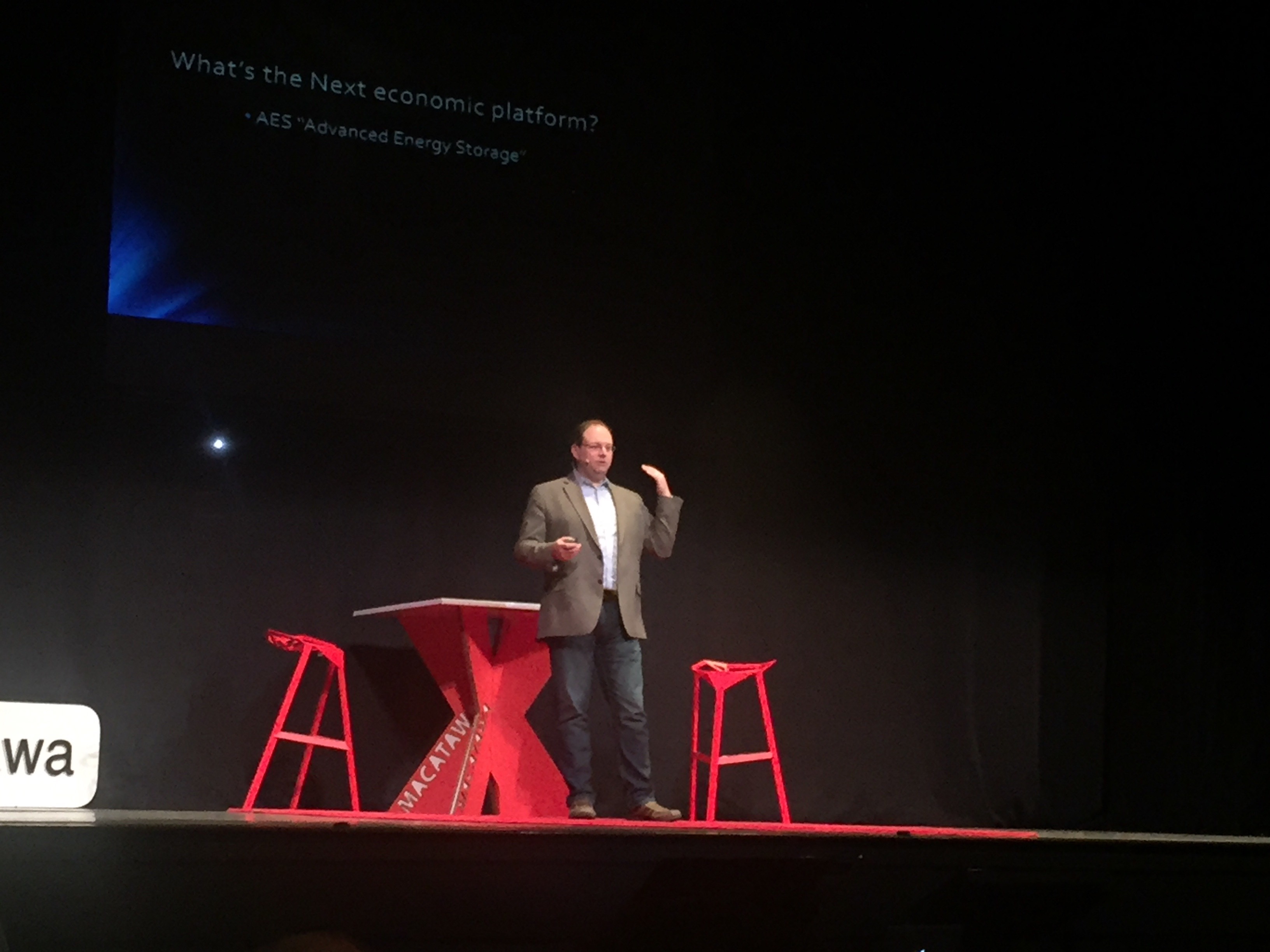
what is the next economic platform? - AES “Advanced Energy Storage”
more products are battery powered
limiting views - we currently think of batteries in a limited way, consider it more like an engine
there are many types of lithium ion batteries - lithium ion phosphate
nickel manganese cobalt
nickel cobalt aluminum
lithium titanium oxide
etc.
The market is growing to be a $40 billion and is currently growing at double digit rates
innovation in West Michigan from many organizations and companies with research, manufacturing, and services - Michigan State University Bioeconomy Institute
Volta Power Systems
Midwest Energy Group
what’s next - learn – it isn’t what you have been told – look at doing things in new ways with batteries
invest – opportunity is everywhere – invest time and energy to look at creative applications
Categories: Learning · Tags: tedxmac2017 · Originally published on stephen.braunius.org
I wrote this article for the eNews from Fellowship Church of Holland, MI
We sang a song this past Sunday called “All Ye Refugees.” The following words, in particular, keep circling in my mind:
Oh refugee, I did not cast you out
In death and broken ground, Salvation springs
My body and my blood, the healing that you need
Come and receive
Welcome home, gather round
all ye refugees, come in.
It is sung by Sandra McCracken. You can listen to the song here .
The word refugee has it roots in the word refuge. A refugee is one who is seeking refuge. In our current context we think of people throughout the world who might be oppressed and seeing refuge in America or other countries.
Spiritually, many in our world are seeking refuge from pain, hurt, and struggles. The good news, as we heard from Pastor Brian, is that the gospel provides refuge and healing. This message is that God came to this world as a human to carry all of our burdens, brokenness, anxieties, fears, and sickness in order to conquer them once and for all. Yes, we still face challenges, but we no longer face them alone or in hopelessness.
This time of year is always a reminder to me of what it is like to be in a place of brokenness. My brother passed away on January 28, 1996. This happened after his body rejected lungs from a transplant he received that was supposed to bring him new life from his Cystic Fibrosis. It was a time of darkness and mourning as I cried out to God with pain and wondering on why he didn’t heal my brother. In this pain, God changed me and transformed me. I would not wish this type of challenge on anyone. At the same time, God has somehow strengthened me, given me peace, and changed how I view others and the world.
I pray that you might experience His peace that passes all understanding and that you might be healed from whatever pain you are experiencing so you can proclaim, like David in Psalm 30:11-12
You did it: you changed wild lament
into whirling dance;
You ripped off my black mourning band
and decked me with wildflowers.
I’m about to burst with song;
I can’t keep quiet about you.
God, my God,
I can’t thank you enough. (The Message)
This is the good news of the gospel and it isn’t just for us. Let’s share it with our neighbors and the world. If you haven’t experienced this for yourself and want to learn more, please reach out to any of the staff at Fellowship or others in the congregation.
Welcome home, gather round
all ye refugees, come in.
Where do you need healing?
How have you received healing?
Where might God be asking you to provide healing to others?
Categories: Learning · Tags: Faith · Originally published on stephen.braunius.org
The Art of Working Together – Alan Mulally #GLS2016 Session 2
It is important to place people first and work together to see and share problems in order to solve them by working together. To do this, use data and information to see current reality. Healthy teams need to be able to hold 2 things in tension at the same time:
Deal with reality
Have a plan to deal with it
Consider using the colors red, yellow, and green when sharing goals and monitoring all aspects of a project.
Tags: GLS2016 · Originally published on stephen.braunius.org
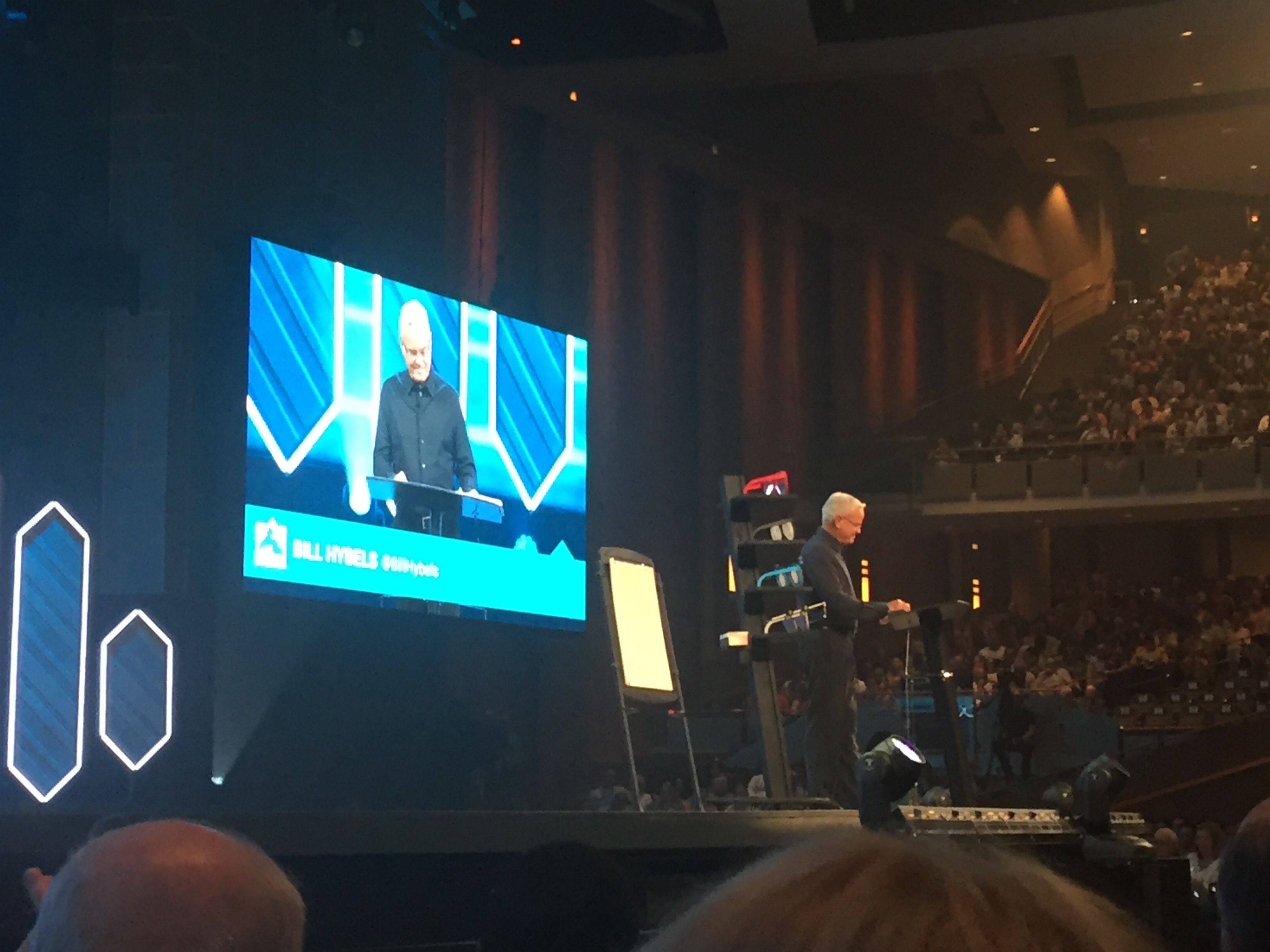
The Lenses of Leadership – Bill Hybels #GLS2016 Session 1
There are four lens’ of leadership that require the attention and are the responsibility of the leader:
Passion (red framed glasses): Keep passion alive in your spirit because it is infectious. Read materials that ignite passion, be around people with passion, and go to places that inspire passion.
Culture (shattered lens glasses): Care about people because God cares about people. Feedback is very important so don’t shy away from doing it and building it into the culture.
Goals (adjustable lens glasses): Watch out for too many or too few goals in an organization. Pay attention and keep adjusting.
Legacy (glasses with rear-view lens attached): Look at your past to see where most of your energy has been spent. Align your energy with how you want to be remembered. Start now!
Tags: GLS2016 · Originally published on stephen.braunius.org
This is an article I wrote for the February 17, 2016 newsletter for Fellowship Reformed Church
For the past few months I’ve been on a quest to remove clutter from my life. I believe the reason for my desire to see things clean, orderly, and simple is because I will have to move out of my office at Fellowship by the end of April. This is something we, as a staff, will all be doing so the construction crews can start the office expansion and renovation. In this process, I’m seeing all of the piles of papers that need to be filed or shredded and the books that need to be sorted and donated. Sometimes this feels overwhelming and other times it makes me sad. The sadness comes from realizing all of the hopes and dreams that are tied up in objects. Some of the books look really great, yet I haven’t read them. Some of the papers might hold secret treasures that would have helped me make a better decision. As I write these words, I realize even more clearly how much energy all of these possessions and clutter take from me. Peter Walsh, author of many books about organization, has this to say about clutter :
“It means anything that stands between you and the vision you have for your best life. It could be a pile of inherited furniture or a jumble of kids’ toys all over the living room. But it could also be the constant self-doubt that creeps into your decision-making, anger about how you’re treated at work, shame about your weight or looks, or a tendency to respond defensively and critically when your spouse challenges you. Whatever the case, you have to ask yourself, “Does this item or thought or response move me closer to my vision for my best life?” If it does, great. If it doesn’t, what is it doing in your life?”
This past Sunday , Marlin Vis shared the story from Mark 10:17-31 about how a really good guy, who happened to have a lot of stuff, came to Jesus and asked what it would take to receive eternal life. Jesus tells him to remove the clutter because it is standing between him and what is best for his life. OK, I’m paraphrasing, but doesn’t this sound a bit like what Peter Walsh said in the previous paragraph? I hate to put Peter Walsh and Jesus in the same paragraph, but also recognize that both are speaking truth about the hold clutter and possessions can have on us.
So what might we receive when giving up those things that have a hold on our lives? Marlin shared two guarantees about what we receive when we choose Jesus over stuff:
We will have enough (When we have more than enough, we share it with those in our community who don’t have enough).
We will be made well.
I don’t know how this sounds to you, but it makes me feel energized to stop holding onto the security of clutter and start holding onto the promises of God. Enough! I need to go recycle some papers.
Categories: Learning · Originally published on stephen.braunius.org
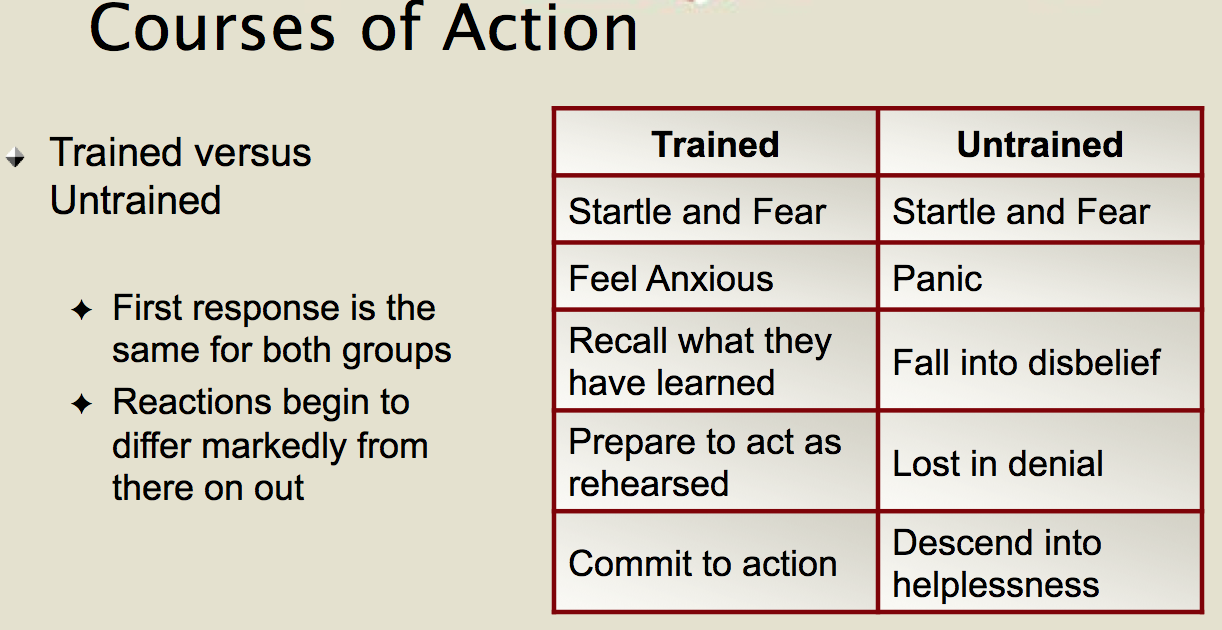
I recently attended a safety and security presentation. One particular element that I found particularly interesting was how trained vs. untrained people respond during a crisis. It looks like the original source for the information is from the Center for Personal Protection and Safety
As you can see, the path for trained and untrained start in the same way but then take very different paths. It made me wonder about how these play out in all of our non-life threatening situations.
When I’m stuck, do I commit to action or descend into helplessness? Conversely, is it possible that when I’m feeling helpless I might need to respond with action?
Categories: Learning · Originally published on stephen.braunius.org
My family and I have been catching up on Star Wars over this Christmas break. Yes, we even have Star Wars pajamas and a BB-8 (a small robot in the new Star Wars movie) stuffed toy for our dog. Seeing the movie on opening night a few weeks back left us feeling a wide variety of emotions. J.J. Abrams, the co-writer and director of the film, has said that the key for the film was to return to the roots of the first Star Wars film and for the story to be based more on emotion than explanation ( here ). We thoroughly enjoyed the adventure the movie took us on, but at the same time there were many moments that made us long for a resolution and feel sad. At the end, even with this mixture of feelings, we celebrated that there would be additional movies coming in the future where we could have confidence that the story would resolve and where good would conquer evil.
This past Sunday Pastor Janelle Koolhaas shared how we can have confidence in God’s everlasting story ( listen here ). She shared how Simeon and Anna, both in old age, were at the temple waiting to meet the Messiah (Luke 2:25-38). They were able to meet him as a baby but did not get to live to see Him live, die, and rise again. They only saw part of the story but knew that God would be faithful to deliver His people as he promised.
We, too, often do not see the whole story but have a unique story that fits perfectly into God’s plans. We find in His word, the Bible, that His timing is not slow or mistaken. Many times we may feel confused or broken but we can rest assured that our story belongs, is valid, and fits right in. In those times we can also take comfort by trusting in God’s story and what He has done, is doing, and will do.
Often, in my work at Fellowship and my personal life, I find it helpful to step back from challenging situations and attempt to look at things with God eyes and in light of His bigger story. I wonder things like:
What makes the timing right for this to have happened?
What happened in the past that equips us perfectly for this situation?
Who has God called into the story at this time and why?
What is the best possible outcome that would show God’s faithfulness?
How has God equipped me to have a positive impact?
You can probably think of other questions that allow you to see things from God’s perspective. Ultimately, this is a way we can show our faith in Him. This makes me think of a gift my daughter painted for me this Christmas. It has words about faith from Hebrews 11:1-3 (NLT):
“(1) Faith is the confidence that what we hope for will actually happen; it gives us assurance about things we cannot see. (2) Through their faith, the people in days of old earned a good reputation. (3) By faith we understand that the entire universe was formed at God’s command, that what we now see did not come from anything that can be seen.”
I find great assurance in these words and have great hope for what God has done, is doing, and will do. You might also find comfort and assurance in reading and praying the following words from Psalm 146 over the coming days as an act of faith, hope, and love in being a part of God’s story:
1 Praise the Lord! Praise the Lord, O my soul!
2 I will praise the Lord as long as I live; I will sing praises to my God all my life long.
3 Do not put your trust in princes, in mortals, in whom there is no help.
4 When their breath departs, they return to the earth; on that very day their plans perish.
5 Happy are those whose help is the God of Jacob, whose hope is in the Lord their God,
6 who made heaven and earth, the sea, and all that is in them; who keeps faith forever;
7 who executes justice for the oppressed; who gives food to the hungry. The Lord sets the prisoners free;
8 the Lord opens the eyes of the blind. The Lord lifts up those who are bowed down; the Lord loves the righteous.
9 The Lord watches over the strangers; he upholds the orphan and the widow, but the way of the wicked he brings to ruin.
10 The Lord will reign forever, your God, O Zion, for all generations. Praise the Lord!
Categories: Learning · Originally published on stephen.braunius.org
This is an article I wrote for the Sunday’s Comin’ eNewsletter from Fellowship Reformed Church
Last week I discovered fainting goats on YouTube. Have you ever seen them? They are rather small and they have a strange reaction to being startled or scared–their muscles stiffen up and the fall over onto their side. Watching one video led me to more strongly entertaining goat videos which led me to screaming goats. What are screaming goats? They are goats that periodically make a scream that sounds strangely like a human. Now put screaming and fainting into the same video and you really have something special. Check it out here . I have to warn you, this video may induce serious laughter. In fact, it might even be contagious to others.
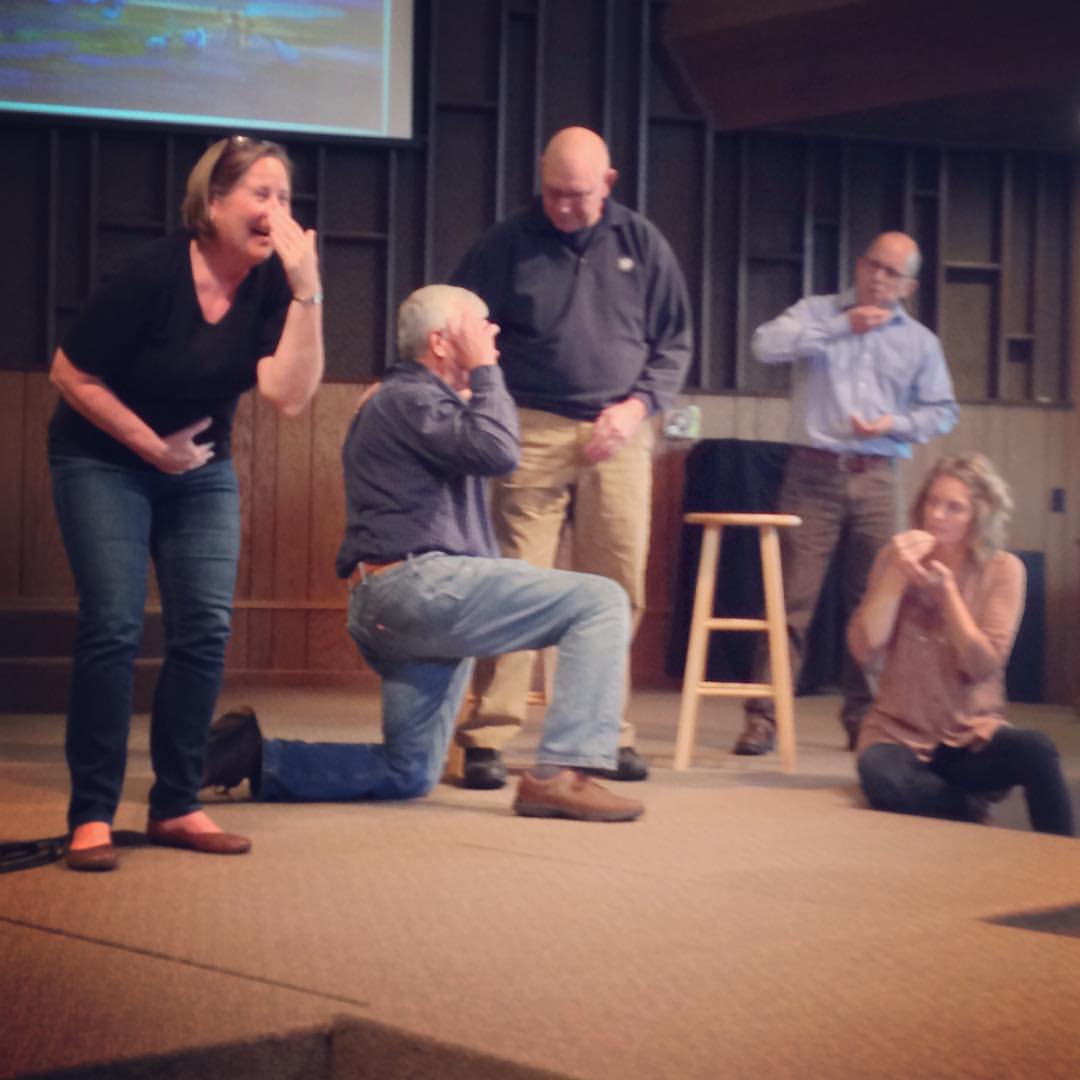
This past Sunday we laughed during worship when Pastor Brian helped us understand the ridiculous nature of Abraham and Sarah being told that they would have a child at such an old age (Abraham was 100). He talked about how strange it might be for someone to give birth in the geriatric ward. Can you imagine? In fact, Sarah knew we would laugh whenever we heard this story when she said, “‘God has brought laughter for me; everyone who hears will laugh with me.’ And she said, ‘Who would ever have said to Abraham that Sarah would nurse children? Yet I have borne him a son in his old age.’” Genesis 21:5–7 (NRSV)
This story was acted out beautifully by some members of our congregation. At the moment of Sarah’s laugh Jayne went into a pose that elicited laughter from us all. In case you weren’t able to be with us in worship, here is a photo that was captured by Jordan Clegg:
Isn’t that a great moment? All this laughter made me want to learn more by asking my friend, Google. Check out these amazing health benefits:
Laughter relaxes the whole body. A good, hearty laugh relieves physical tension and stress, leaving your muscles relaxed for up to 45 minutes after.
Laughter boosts the immune system. Laughter decreases stress hormones and increases immune cells and infection-fighting antibodies, thus improving your resistance to disease.
Laughter triggers the release of endorphins, the body’s natural feel-good chemicals. Endorphins promote an overall sense of well-being and can even temporarily relieve pain.
Laughter protects the heart. Laughter improves the function of blood vessels and increases blood flow, which can help protect you against a heart attack and other cardiovascular problems.
http://www.helpguide.org/articles/emotional-health/laughter-is-the-best-medicine.htm
I think I’m going to have to find more ways to incorporate laughter into my life. As we learned on Sunday, God’s grace should cause us to break into laughter with how unexpected and amazing it is. You can experience this by saying the following statements we heard on Sunday:
God loves me
God wants to be in relationship with me
God has saved me
God forgives me
God heals me
God is with me
God takes me as I am
God wants to use me for His will
Were you able to do that without breaking into a smile or maybe even a laugh? Can you believe it? The God who spoke our world into being loves you, forgives you, is in you, and gives you eternal life! This is the good news of the gospel.
“Jesus looked at them and said, ’For mortals it is impossible, but not for God; for God all things are possible.’” Mark 10:27 (NRSV)
Categories: Learning · Originally published on stephen.braunius.org
This post was written for a Fellowship Reformed Church eNewsletter called “Sunday’s Comin'”
In July, we took a family trip with the goal of spending three days in New York City. We chose to stay in New Jersey at a hotel recommended by my Aunt and Uncle who live there. We could then commute into the city by water ferry or driving. On our first night in New Jersey we went to visit my aunt and uncle. We were running a bit early so we stopped to fill up with gas. In New Jersey, you are not allowed to fill up your own vehicle with gas. You need to wait for an attendant who takes care of it for you. Remember those days of full-service gas stations?
Fast forward a few days and we, after some wonderful days in New York City, started driving home. We found that we needed to fill up with gas again in Pennsylvania. Pennsylvania, like Michigan, allows you to fill your own car with gas. So, I got out of the vehicle and started filling up. As I was standing there a lady on the other side of the pump came over and said, “Excuse me. I’m from New Jersey and don’t know how to use this pump or remove the gas cap. Would you be able to help me?” I was happy to do so and showed her how to remove the gas cap from her car, insert the credit card, remove the nozzle from the pump, select the grade of gas, and start filling the tank. She was very appreciative.
As I headed back to my own vehicle, I thought about how helpless it must feel to own a car and not know how to put gas in it. Thankfully, she was willing to admit that she did not know how to do it and then ask for help. It would have been a very different exchange if she would have demanded me to fill up the car with gas by saying, “Excuse me. Fill up my car with gas.” I might have responded by ignoring her or questioning her motives. It was the act of admitting first and asking second that opened my heart to her story and made me more than willing to help.
I remembered this story when I heard Pastor Brian preach about confession this past Sunday. He defined confession as getting honest with self, others, and God about our brokenness. In a way, this woman at the gas pump had to confess that she did not know how to pump gas in order to receive help. I wonder what it might be like if we put ourselves in a similar posture of confession with an area of life where we might feel stuck and helpless. Would we then be able to have the courage to admit or confess in order to receive help or forgiveness and ultimately freedom?
What might you confess this week in order to more fully experience life?
1 Peter 2:4-5 “Come to him, a living stone, though rejected by mortals yet chosen and precious in God’s sight, and like living stones, let yourselves be built into a spiritual house, to be a holy priesthood, to offer spiritual sacrifices acceptable to God through Jesus Christ.” (NRSV)
Categories: Learning · Originally published on stephen.braunius.org
The Global Leadership Summit this year energized, convicted, and inspired me. The following ideas have been key take-aways for me:
A recurring theme through both days was that the disciplines that I continue to see as important in my life, yet are so hard to stay consistent with, are critical to my health and development and must continue to be an intentional pursuit (spending time with God in solitude, music, and physical fitness). In particular, I’ve been making sure to listen to more music!
Horst Schulze ( http://stephen.braunius.org/session-5a-horst-schulze/ ) was probably the speaker that shifted my thinking the most. He opened my mind to the service industry and how serving should come out of truly caring about and for others. I loved learning aboutthe movement of interactions with people which includes: - Welcome within 12 feet you need to say welcome or greet someone by showing care in the eyes
Comply to what a guest wants from you by caring for their needs
say farewell
I loved listening to Brene Brown ( http://stephen.braunius.org/gls15-session-3b-dr-brene-brown/ ). Her movements of “the reckoning, the rumble, and the revolution” were a wonderful reminder on sharing the story we tell ourselves to others. She said under “the revolution” that “When we deny the story it defines us. When we own the story we can write the ending.” It was really good stuff and I’m “trying this on” in many of my relationships.
Albert Tate’s message ( http://stephen.braunius.org/session-4b-albert-tate/ ) was a wonderful reminder, “The work is not about your name, it is about His name. It is not about your power, it is about His power.” I’ve found great peace in His message of relying on God and being blown away with what God can do when we simply bring Him what we have and rely on Him do the rest.
What impacted you?
Categories: Leadership, Learning · Tags: GLS · Originally published on stephen.braunius.org
Global Leadership Summit 2015
Session 7a
Sam Adeyemi
Crushing the Power Chasm
born into a middle-class family with dad a government employee
construction in the family
family went through financial hardship
desired success and comfort
“When God asks you a question it is not because he doesn’t know the answer. Most of the time he wants to confront you with your foolishness.”
“You will not find the definition of success for your ministry or organization until you help the people I sent to you to succeed.” - "The object of leadership for many leaders is their own success, but the object of Christ’s leadership was the success of His followers
John 14:12 – for Christ the object of his leadership was not Him, it was the success of His followers
this takes the focus off of us and on to the people. Ask, “What are their needs? What are their problems? What are their issues?”
Selfishness is the focus of many leaders – James 4:3
“Following you should hold the promise of life change for those who follow you.” – Mathew 4:19
In many cultures being a leader makes you superior to the people you are leading. In such a culture leaders don’t empower others. - Mark 10:42 – Jesus is lived in such a culture
Powerful are very powerful and powerless and are very powerless
“The downside to power distance is that it can leave followers with low self-esteem and afraid to challenge a leader’s views.” - they tend to wait for approval before they do anything (a permission seeking culture)
people will not give feedback to the leader
leaders can be less accountable
“Jesus crushed the power gap between men and women, adults and children, leaders and their followers.” - Jesus embraced the children and told adults to be like them
Jesus healed on the Sabbath to confront the power structure
“As leaders, we should create the Jesus type of power structures”
Matthew 10:1 – disciples given authority and power
“Jesus gave power away.”
Jesus said to Peter, if I can do it you can do it to
“There is something about leaders and talented people that makes us think others cannot do what we do.” - Numbers 11
Shepherds feed sheep which allows sheep to give back to sheep and invite more sheep
There is a huge opportunity in parts of the world where people are oppressed and there are power gaps. - It is not the absence of money that makes you poor. You need ideas to make money.
There are opportunities to empower people
“Jesus did not only crush the power gap, he overturned it”
Luke 22:27
Originally published on stephen.braunius.org
Global Leadership Summit 2015
Session 7b
Liz Wiseman
Rookie Smarts: Why Learning Beats Knowing
rookie moments when doing something challenging and meaningful
“I don’t want a job I’m qualified learn or there would be nothing to learn.”
Questions to ask yourself about rookie moments:
how di dyou feel
how did you operate
what did you do when you didn’t know what to do
what was your aspiration?
We operate in simple small gritty and powerful way
Experience - “Once we have knowledge we tend to make assumptions and they can often be bad assumptions.”
With experience, sometimes we see what we expect to see and sometimes we can miss things entirely.
Inexperience - bound to make some rookie mistakes
has an upside that must be explored
The upside of inexperience - operate in hunter gatherer mode to seek expertise from others
LEARNING CURVE: delight > discovery > desperation (fire-walker mode–quick and careful) we tend to learn the most when we are feeling a bit desperate > deliver > delight > comfort OR hubris - signs you are on a plateau - things are running smoothly
you already have the answers
you get positive feedback - when we are at the top of our game we are in danger
you’ve become the mentor
you’re busy but bored – soul-sucking and contagious
can we be dulled to danger simply because we feel comfort?
when you have nothing it forces you to turn outward
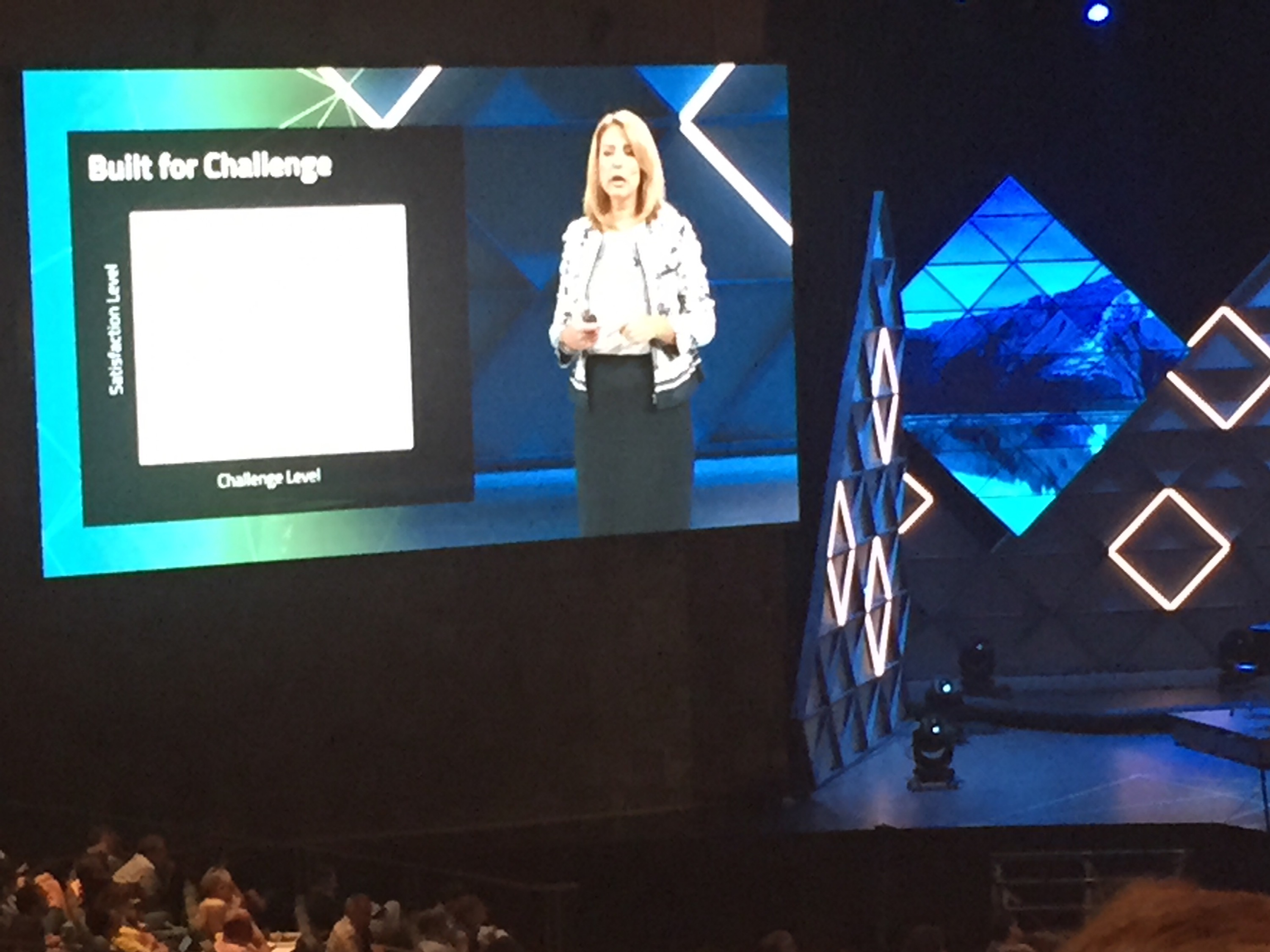
when challenge level goes up, satisfaction level goes up
the secret of the rookie zone is it is powerful because we don’t like it–we want to reduce the tension (rubber band stretch between people)
as leaders we sometimes stretch too hard or we reduce the tension to rescue people
How do we rekindle rookie smarts?
master the art of the pivot of Leader & Learner by trying the following: - things are running smoothly SO INSTEAD throw away your notes in order to have fresh thinking
you already have the answers SO INSTEAD ask the questions
you get positive feedback SO INSTEAD admit what you don’t know
you’ve become the mentor SO INSTEAD let someone else lead - leaders need to be able to stop and to be able to go in reverse
try following someone on the team
go and spend time with the newcomers and allow them to renew you
you’re busy but board SO INSTEAD disqualify yourself and put yourself back at the beginning of the learning curve - when we put ourselves back in the rookie zone we do our best thinking and find our greatest joy “It’s awkward but it’s exhilarating”
“If you want your team to stay relevant, lead them into the unknown”
stay a learner and know when to put your rookie on
Our greatest joy comes from daring to begin again.
Originally published on stephen.braunius.org
Global Leadership Summit 2015
Session 5a
Horst Schulze
Creating World Class Service
“Ladies & Gentleman serving Ladies & Gentleman” background - started working in a world class hotel at age of 14
observed a mater Dei who came to work to be excellent in his profession and caring for the people around him
A great business - (1) keep the customer (dissatisfied – terrorists against company, satisfied – neutral customers willing to move somewhere else, loyal customers – fight for them)
(2) find new customers
(3) get value from customers
(4) work on efficiencies
Customer loyalty - your customer/guest trusts you, you have developed trust
giving the customer what they want is how to develop trust
all want three things - the product needs to be defect free
timeliness – super important and be super attentive to this
the people who give it to you need to be nice to you
this is the same in all businesses
being nice to the customer is the most important thing
Service – begins the instant you make contact (the first 10 seconds) – essential - Welcome within 12 feet you need to say welcome or greet someone by showing care in the eyes
Comply to what a guest wants from you by caring for their needs
say farewell
caring is the thing you remember
good service over time results in customer loyalty
personalized/individualized service results in customer loyalty
Why do we go to work? Create and be excellent – serve employees by demanding and leading to excellence
our role, as leaders, is to demand excellence and caring - carefully select possible candidates with a process that looks for caring
orientation that includes letting everyone know that no one can claim they are better than anyone else…every person and their positions are important..let people know how they benefit from what they do - we are leaders. We have forfeited the right to make excuses
is the direction and destination good for all concerned. If you can say no in one case, don’t do it.
say who you are as an organization, invite them into the dream of the organization and purpose, it is immoral to higher people just for a function.
the key product that we deliver and that is being produced is service to human beings. respect to human beings
“if it is important we need to repeat it”
“if you receive a complaint you then own it”
24 point credo/canon
sustaining “come to work to be part of a purpose” “service is caring from the heart”
Originally published on stephen.braunius.org
Global Leadership Summit 2015
Session 5b
Sheila Heen
Thanks for the Feedback
Feedback comes in many different forms
“Feedback is my relationship with the world and the world’s relationship with me”
feedback is one of the toughest conversations that happens in all organizations
people all of the world struggle with feedback conversations
these conversations drive organizational learning, employee engagement, and cross-functional collaboration
in any exchange between giver and receiver, the receiver is in charge because they can choose what they want to receive
what might it look like to teach receivers how to receive feedback, even poorly delivered feedback
2 human needs - the need to learn and grow (this is energizing) “feedback should be joyful”
the need to be accepted or respected or loved the way we are now
types of feedback (we need all three) - A ppreciation being noticed by others which gives motivation
C oaching anything that helps you grow, learn, get better (as you get more senior you have a tougher time receiving coaching)
E valuation rating and ranking
93% of American workers feel under-appreciated at work
evaluation and coaching get tangled together which removes the effectiveness of the coaching
even when we hear coaching we don’t always take it - it was wrong
we don’t trust them
being too stubborn
being too young
many others reasons…
boundaries are important “if you can’s say no then your yes’ are freely given” - we decide too fast (when feedback comes in we look for what is wrong and can always find something wrong)
3 trigger reactions to feedback - truth triggers: is it true, good, accurate
relationship triggers: who is giving the feedback
identity triggers: the story you tell yourself about who you are and your wiring
skills to receiving feedback - (1) not deciding if the feedback is right or wrong and, rather, think about what the giver means
(2) See yourself clearly and accurately (everyone has blind spots) - facial expressions, body language, tone of voice, patterns of behavior, impact on others
talk to your friends for help: (1) supportive mirror to encourage around what is wrong with the feedback (2) honest mirror to find out what might be right with the feedback
when leaders become better receivers - receive more feedback
become a role model
automatically become a better giver
become a better giver - don’t ask people for feedback in a general way
“one thing” pick one person who matters in my life and ask: - What’s one thing you particularly appreciate?
What’s one thing you see me doing – or failing to do – that you think I should change (or is getting in the way?
“We need each other to see our own limitations and where to grow next”
“Feedback accelerates your personal, professional, and spiritual growth”
Originally published on stephen.braunius.org
Global Leadership Summit 2015
Session 6
Brian Houston
Resilience: One on One with Brian Houston
parents a part of Salvation Army up until he was 3 and dad had nervous breakdown
grew up in New Zeeland
new book coming out in September “Live Love and Lead”
call felt from his early years to be a preacher (Ephesians 1:1)
father had abused a young person and was a huge emotional hit – still a challenge to this time
changes in life after a panic attack and finding self in a low point - changes in way of travel
no more sleeping tablets
adding more discipline into certain parts of life
have risen out of the depths very quickly
music from Hillsong - build a church that helps others build church
Darlene was instrumental part of music for 15 years
“Music is an arrowhead for a healthy church.”
in most organizations who you start with is not who stays with it over time - “It is always good in leadership to take your time and invest in people”
Ecclesiastes 3 – you are beginning a season and we are all only hear for a season – let’s give it our best to God for the season (Bill Hybels)
planting Hillsong churches in many challenging cities around the world - Goal of: “Building influential churches that can impact culture”
building churches in various places and being themselves
put the right person in the right place at the right time and God does great things
movie about “Hillsong United” and their latest album which will be released in the near future
an anointing on his life that he helps people know that God can do great things – a Faith anointing - loves what he does
loves the Lord
loves people
keep getting up and keep showing up and God will do great things
longevity is the greatest strength that anyone can have for God
Music and leadership have a very interesting juxtoposition - leaders who carry the biggest pressure have the closest affinity to the power of music
many strong leaders need to listen to music for strength
people in evaluative position have a hunger in their soul for things like music
in a time of pressure listen to the same song over and over
“Leaders see what other people can’t see yet…these unique pressures often lead to fear.” (Bill Hybels)
There is no other name than the name of Jesus – we can trust in God’s word and His promises – they are beautiful and unchangeable
songs have a huge potential to bring healing to people
anointed music is often created in pain]
song “I’m no longer a slave to fear”
Psalm 68 “I will be a father to the fatherless”
song “you are a good, good Father”
song “oceans” - “so much of leadership is water walking”
“leaders are almost always out of sight of land” (Bill Hybels)
“leaders, you cannot do this journey without help from God” (Bill Hybels)
“It is our job to stay connected to the God who can help us do great things” (Bill Hybels)
we can cheer each other on through the power and blessing of music" (Bill Hybels)
song “through it all my eyes are on you…it is well” “It is well with my soul”
Originally published on stephen.braunius.org
Global Leadership Summit 2015
Session 2a
Jim Collins, Seven Questions: Beyond Good to Great
“we are all young leaders”
“questions are better than answers”
(1) What cause do you serve with level 5 ambition? - “if you have a charismatic cause you do not need to be a charismatic leader”
Level 5 leaders have a unique combination of personal humility with an abominable will
leading with service and ambition
level 5 leaders inspire people to follow the cause
“Commitment to service is not a sector choice. It is a life choice”
(2) Will you settle for being a good leader or will you be a great leader? - “We are going to need great leadership through all sectors” since all sectors are networked
3 key areas: - Know what must be done (and be right most of the time).
It’s about getting people to want to do what needs to be done.
It is not a science. It is an art.
Most great leaders started as good leaders and grew
“Will you scale your leadership with the organization?”
(3) How can you reframe failure as Growth in pursuit of a BHAG (Big Hairy Audacious Goal)? - a BHAG is something that you are not sure you can actually accomplish
“I am not a failure. I am growing.”
Growth is the other side of the coin from Success.
(4) How can you succeed by helping others succeed? - “we succeed at our very best only when we help others succeed”
“let me help you”
This creates an incredible idea of “You are never alone”
Triangle (service, success, growth) - build a culture that you are willing to sacrifice for with BHAGs and communal success in order to have the idea that we only succeed by helping each other
(5) Have you found your hedgehog – your personal hedgehog? - living in the intersection of passion, what I am made for, and economic engine to make a living and work toward my BHAGS
“True creators stay in the game”
“If you see life as a series of hands, and play every hand to the best of your ability it leads to a powerful effect.”
“You have to be in your hedgehog”
“Real creative impact accelerates, if you choose, after 50”
(6) Will you build your unit – your minibus – into a pocket of greatness? - “Focus on your unit. Not your career.”
“Be a first who leader. Not a first what leader.”
“Be rigorous, not ruthless, of your hiring decisions.”
“Life is people.”
The greatest leaders know how to make a distinctive impact on people
(7) How will you change the lives of others? - “Life is people.”
Originally published on stephen.braunius.org
Global Leadership Summit 2015
Session 4b
Albert Tate
Leading with Leftovers
it is time to challenge the idea that we leave it all on the field of our work
how do you lead and still have something left?
let’s live for a beautiful eulogy rather than an accomplished resume
John 6: looking at how Jesus leads with leftovers - John 6:5 the moments Jesus asks dumb questions – he wants us to see the logic and do the math of the situation to understand the miracle when on the other side – I can’t do it in my own power - the dumb question leads to a dumb idea in a boy with 2 fish and 5 loaves of bread
the power of a dumb idea - as leaders, leave room for dumb ideas so God can transform the lives of people
“You never know when God is going to put his hand on a dumb idea and bring transforming power.”
“Don’t underestimate the power of a dumb idea.”
do you celebrate dumb ideas?
Jesus does the miracle with what we bring – like the lunch the boy brings - “What does it mean to pack our lunch?”
The boy brings his lunch and moves out of the way - bring what we have, give it to Jesus, and get out of the way
often we bring what we have to Jesus and try to give him instructions
this is a time to discover the awe and wonder of God
when was the last time you were blown away with what God did in your church, home, community, or company?
Where in your business or leadership to you need to get out of the way?
They were full & they had leftovers - “What would it mean at the end of the day if you had something left?”
we are not limited if we surrender to our Almighty God
it is not about our name being great, it is about giving glory to the name of God
“We don’t have to live outside the promise of God in the scarcity of this world.”
There is power, hope, joy, and peace in being with God
you aught to thank him and give him praise
The work is not about your name, it is about his name. It is not about your power, it is about His power.
Originally published on stephen.braunius.org
Global Leadership Summit 2015
Session 2b
Ed Catmull
Creativity, Inc: One on One with Ed Catmull
One of the great misconceptions of our time is not understanding that creativity is in both science and art
Art is about learning how to see. Wouldn’t we want this in all areas of business.
It all comes down to the power of a great story.
Stories are the way we communicate with each other at every level.
“The good stories are the ones that connect with emotions.”
When presenting ideas to people and it doesn’t look good the measure of progress is how the team is working together and not the idea. If there is laughter in the room, they will solve it.
Brain trust (a group to help with problems) team foundations: - (1) Peers talking to peers (not boss to employee)
(2) In that room for that time there is no power structure
(3) Have a vested interest in each others’ success
(4) Give and listen to good notes
magic happens when people are not attached to their ideas so they can be worked on
it is inevitable that the team will go astray during the work and lose objectivity. Your peers or a powerful outside force/audience, can help pull you out.
“Creativity is about solving problems.”
“Coming up with solutions is a creative act. In that creative act you want other people to help you.”
Failure has 2 meanings: - Intellectual – something to learn from
Danger – deep emotional feelings in working about being hurt or attacked by others
Address the thing that brings about the fear by being honest.
Fail early and fail fast. We will fail and it needs to be safe to do it. If you can do it fast you will progress more quickly.
Don’t punish or embarrass people when they fail.
“All good artists know they need to operate within constraints.”
The problem with being unbounded with no budget means you will have too many options. A budget helps bring constraint.
It gives greater energy to have a constraint.
post mortem: take time at the end of a project to maximize learning by looking at the good and the bad (introspection) – the introspection needs to be done differently each time because people will game the system
“Trust is something you have to earn and not just be something you agree to do.”
Stating values is easy. It is hard to find out why you aren’t living up to them.
Changing office layouts: “With open spaces you have accidental encounters.”
Don’t have many rules and people need to go on field trips to research. You have to go there and find something you don’t know. “People sense things are real even when they don’t know why.”
“Education is storytelling.” “Marketing is storytelling.” “Our job is to use our storytelling for good.”
Silent retreat – the chattering in your mind is not you…it takes 4 days for the chattering to wind down
Originally published on stephen.braunius.org
Global Leadership Summit 2015
Session 3a
Adam Grant
Give and Take: A New Perspective on Leadership
What causes paranoia in an organization?
3 categories of human interactions - Takers: think of every interaction as getting from others without giving back - narcassist
some people become takers when taken advantage of when they were givers or matchers
Givers: enjoy helping others with no strings attached
Matchers: keep an even balance of give and take
many of us have blind spots when we think we are givers and are actually takers or matchers…can only find out if asking others
takers rise quickly in an organization and fall quickly
many matchers gossip about takers to everyone in the organization
takers hate to see other takers succeed
givers will be in the top 25% and lowest 25% of the organization
givers often fail in the short run and succeed in the long run
recommendations - (1) get the right people on the bus – most important to keep the wrong people off the bus – keep takers off the team (in the presence of givers matchers become givers) - no correspondence between agreeability and disagreeability
watch out for agreeable takers
most people project their own motivation on others
you can find out a lot about people by asking them to make projections about the future and actions of others
(2) redefine giving - do more 5 minute favors – a micro loan
100 hours a year is the sweet spot of giving (2–11 hours per week)
(3) Encourage help-seeking - the reciprocity ring – have everyone make a request for help in a group and have others volunteer to help (can have requests written anonymously and then have people sign their name on the request sheet)
www.humaxnetworks.com
Let’s start a trend to get people to be “Pro-noid” a fear that other people are wanting to help you
Originally published on stephen.braunius.org
Global Leadership Summit 2015
Session 4a
Sallie Krawcheck
Leadership and Ethics on Wall Street
retirement savings gap/crisis
there is a solution that is a benefit to many
the retirement savings gap is a problem for women
there is real power in the intersection of women and money
diverse teams outperform other teams
diversity has the potential to improve ethics in business and wall street
the number one reason why women accept a job is meaning and purpose
thinking about the client first (relational focus) typically comes from females
this different way of thinking has value
diverse teams make more effective decisions (not quicker decisions)
diversity is hard
the research shows we like powerful men and not powerful women
the courageous conversation is to notice times when we are discriminating
5 thoughts on how to grow diversity - (1) recognize that differences and disagreements are strengths
(2) to improve diversity we need to ask, “do we have the strongest team in place (with diversity)”
(3) really live our values…if you say you care about people it should show in your actions
(4) women are tired (hair and makeup types of things are specific to women)
(5) watch the micro lessons…make sure feedback is given to women in the same way as men
“work every day as if your children are watching you.” (They are)
have gratitude
Originally published on stephen.braunius.org